Why does a paper plane climb or dive?
Help your child relate the balance point to changes in the plane’s pitch and flight.
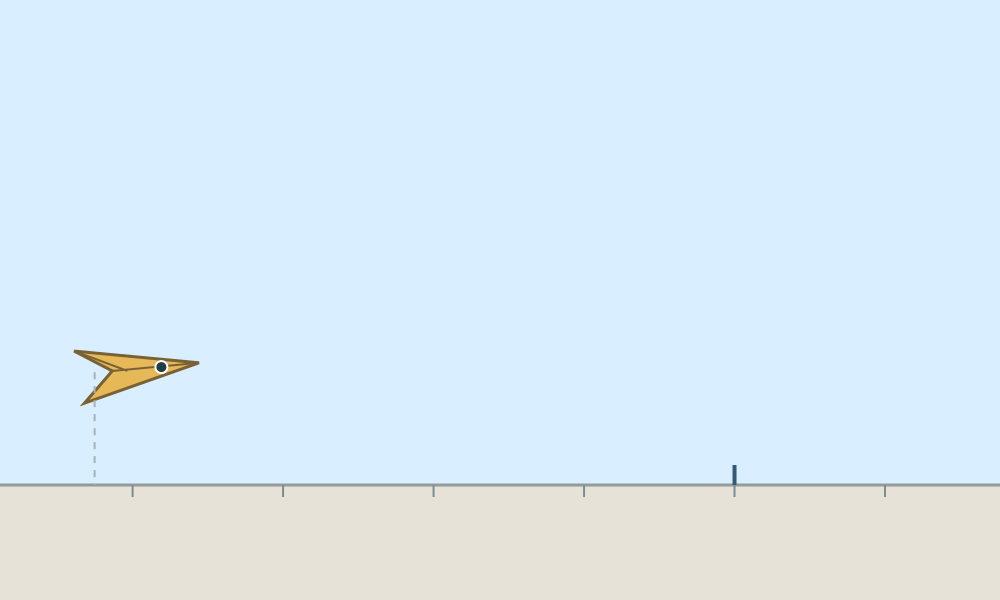
Paper plane: explore balance and flight path
The balance point describes where the plane’s weight is centred. Its position affects whether the nose tends to rise or fall in flight. Wing shape, folds and the launch also matter, so the balance-point number alone is not a score for how well a plane flies.
In the lab, move the balance point a little while keeping the wings and launch fixed. Compare the nose movement first and the distance second. If you then test a wing shape, return to the same balance point.
„Do you expect a smooth glide, a steep climb or a wobble?“
Try it together in the lab
- Begin with a prediction. You do not have to agree.
- Move Balance point slightly toward the tail; keep wings and launch unchanged.
- Compare the nose movement before comparing the total distance.
Next comparison: Compare one different wing shape with the same launch and balance point.
Start the labAn activity away from the screen
Fold two identical paper planes. With an adult, add a small paper clip to the nose of one and leave the other unchanged. Throw both several times from roughly the same height into a clear area. Watch the flight attitude, not only the single longest throw.