Why do triangles help a bridge stay in shape?
Help your child see how triangles and beam length influence a model bridge.
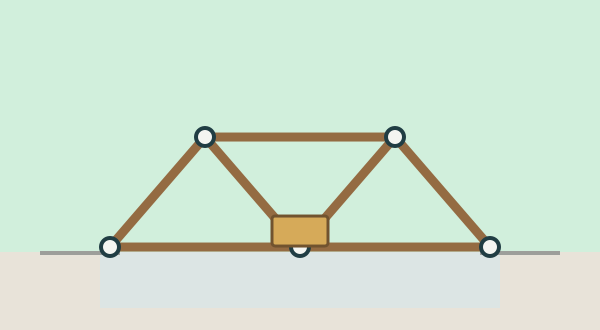
Build and test a bridge: triangles, tension and compression
A bridge transfers its own weight and any load toward its supports. In a model truss, some members are pulled while others are compressed. A triangle of joined members keeps its shape more readily than a four-sided frame with flexible corners. That alone does not guarantee that every member is strong enough.
A long, slender member under compression can bend sideways and buckle. Member length, material, joints and where the load sits also matter. In the lab you can view the members and their forces, then change one part of the design at a time.
„Where might the bridge change shape under the test weight?“
Try it together in the lab
- Begin with a prediction. You do not have to agree.
- Move one upper white joint slightly higher; keep the test weight unchanged.
- Compare which beams are pulled, compressed or fail, using the force display if helpful.
Next comparison: Choose the 25 kg model weight. Test once, then compare one added diagonal beam.
Start the labAn activity away from the screen
Make a triangle from three drinking straws or paper strips and a four-sided frame from four. Join the corners with tape so they can pivot. Gently push each shape from the side and talk about what changes. This compares shapes; it is not a load test for a real bridge.